Colt 1908 Pocket Hammerless .380 ACP belongs in the collector conversation because it connects John Browning design, Colt manufacturing, period use, and the kind of condition details that make an individual pistol more than a serial number.


Gun collectors would commonly refer to these as "safe queens" because they would spend most of their time in the safe. You wouldn't fire these guns or routinely carry them. These were the last guns that I owned that stayed in the safe all of the time.
The Colt Model 1908 Pocket Hammerless is a .380 variant of the 1903 .32 caliber gun introduced five years earlier. This was the gun that introduced the .380 ACP pistol cartridge (designed by John Browning), still popular more than 100 years later. ACP is an acronym for Automatic Colt Pistol. The .380 ACP is also known as the 9mm Short. The name "Pocket Hammerless" is misleading in that the gun is not truly hammerless, but features a concealed hammer to prevent snagging on clothing.
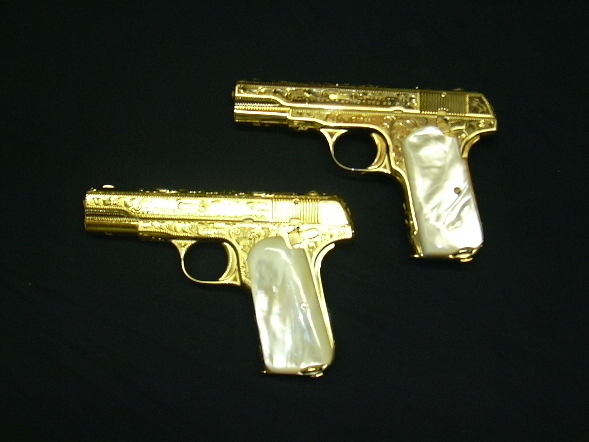
The Colt Model 1908 Pocket Hammerless, despite its name, actually does have a hammer. It's just hidden within the rear of the slide. This feature was innovative for its time, contributing to a sleeker, snag-free profile, which was ideal for concealed carry. The pistol was widely used and highly regarded for its reliability and compact design, making it a preferred choice for personal defense and as a backup firearm for law enforcement officers during the early 20th century.

The .380 ACP (Automatic Colt Pistol) caliber, also known as the 9mm Browning, has an interesting history. It was developed by John Browning and introduced in 1908 alongside the Colt Model 1908 Pocket Hammerless pistol. Here's a brief overview of its history.
Early Development (1908)
John Browning developed the .380 ACP cartridge for Colt's Manufacturing Company. Designed for blowback pistols, which are simpler and cheaper to produce than locked-breech designs. The .380 ACP was suitable for smaller-sized handguns intended for self-defense. The .380 ACP gained popularity in Europe, where it was known as the 9mm Short, 9mm Kurz, or 9x17mm.
Various military and law enforcement agencies adopted pistols chambered in .380 ACP, valuing its compact size for concealed carry or as a backup weapon.
Adoption and Usage (Early-Mid 20th Century)
The .380 ACP was used in several military pistols and submachine guns during World War II. Post-war, the .380 ACP became popular in civilian markets for self-defense due to its manageable recoil and compact dimensions.
Late 20th Century to Present
The .380 outlasted the pocket hammerless pistol with technological advances. Improvements in ammunition technology enhanced the effectiveness of the .380 ACP, making it a viable option for self-defense. The rise in concealed carry permits in the United States led to increased popularity of compact and lightweight .380 ACP pistols. Numerous modern firearms manufacturers produce .380 ACP models, emphasizing ease of carry and concealment.
Collector Takeaway
The Pocket Hammerless Idea in .380 ACP
The 1908 carries the same clean concealed-hammer profile collectors associate with the 1903, while adding the historical importance of Colt’s .380 ACP chambering and a smaller production footprint.
Production Years and Transition Years
Colt introduced the Model 1908 Pocket Hammerless in .380 ACP in 1908 as the larger-caliber companion to the .32 ACP Model 1903 Pocket Hammerless. The two pistols share the same Model M family profile, concealed hammer, grip safety, thumb safety, and Colt/Browning lineage, but the .380 ACP pistol should be researched on its own because its magazine, production totals, military use, and late-war serial numbers are different.
Most collector references place regular .380 production from March 1908 through June 1945, with total production commonly cited at about 138,009 pistols. That makes the .380 model much less common than the .32 ACP version. Earlier commercial tables often appear to stop near 1941, but documented wartime procurement and late military shipments continued into 1945.
| Period | Collector Meaning |
|---|---|
| 1908-1910: early .380 production | Early commercial pistols are normally treated as Type II .380 examples. Look for early serial numbers, separate barrel-bushing features, correct early hard-rubber stocks, and sharp original markings. |
| 1910-1926: main pre-war commercial run | The Type III period brought the integrated barrel-bushing style and the classic Pocket Hammerless appearance. These are attractive collector pistols when the blue or nickel finish, grips, magazine, and slide markings all match the serial range. |
| 1924-1926: important transition years | This is a key collector transition window. Grip style changed from hard rubber toward checkered walnut around the 79,000 .380 serial range, and the magazine-safety Type IV era began in 1926. |
| 1926-1941: later commercial production | Later commercial examples tend to be Type IV pistols. Original finish and correct walnut stocks matter because many pistols from this era were carried, refinished, or rebuilt over decades of use. |
| 1942-1945: wartime and late military production | U.S. military procurement, U.S. Property markings, crossed-cannon marks on some guns, and late Type V features make this period especially interesting. Documented government shipment or general officer history can change the collector conversation completely. |
Collector wording tip: treat 1910, 1924-1926, and 1944-1945 as the major Colt 1908 transition years. Those dates help explain why two pistols that look similar at first glance may differ in bushing style, grip type, magazine-safety features, markings, sights, and value.
Variants
The 1908 .380 ACP is not a high-option catalog pistol in the modern sense, but collectors still separate examples by production type, finish, grip material, markings, and documented shipment history. The standard barrel length is 3 3/4 inches, so unusual value usually comes from originality, factory finish, markings, destination, or documentation rather than barrel length.
| Variant Area | What to Check |
|---|---|
| Type II, III, IV, and V features | The .380 model begins in the Type II period rather than the .32 Type I pattern. Confirm bushing style, magazine safety, slide serrations, sights, and serial range before assigning a type. |
| Barrel length | Standard .380 Pocket Hammerless pistols use the 3 3/4 inch barrel. A different barrel, fit, or finish should be treated as a possible replacement or alteration until proven otherwise. |
| Finishes | Commercial blue is commonest. Factory nickel is desirable when original. Engraved, gold-inlaid, silver-plated, or pearl-stocked pistols are special-order territory and need documentation. |
| Grip types | Early guns used black checkered hard-rubber stocks with several Colt-horse variations. Later guns moved to checkered walnut stocks with Colt medallions. Incorrect reproduction stocks are common enough to check closely. |
| Law enforcement markings | P.D.N.Y. marked .380 pistols are a recognized collecting niche. Known examples were ordered for New York Police Department detective use in the 1913-1914 period. |
| Military contracts and issue | World War II U.S. Property .380s, OSS-associated examples, Navy or Army shipment records, and documented general officer pistols are among the most interesting 1908 variants. |
| Rare configurations | Factory engraved examples, gold inlay, factory nickel with original stocks, original boxes, PDNY inscriptions, crossed-cannon marks, verified British or U.S. military shipments, and Colt Archive letters all deserve extra attention. |
Serial Number Ranges
Serial numbers are useful, but they are only the starting point. The best practice is to compare the serial number with type features and then use a Colt Archive Letter for shipment date, destination, and configuration when the pistol is valuable enough to justify the research.
| Range or Anchor | Collector-Observed Meaning |
|---|---|
| 1 to about 6,250 | Early .380 Type II territory, 1908-1910. These are first-generation .380 ACP Pocket Hammerless examples and command attention when original. |
| About 6,250 to about 79,000 | Main Type III hard-rubber-stock era. Watch for correct hard-rubber grip style and slide/frame fit consistent with the serial number. |
| About 79,000 to 89,000 | Grip and feature transition area, roughly mid-1920s. This range is important because grip style, magazine-safety status, and production-year claims are often confused. |
| About 89,000 to 134,000 | Later commercial Type IV era. Original blue or nickel finish and correct walnut stocks are the value drivers. |
| About 134,500 to 138,000 | World War II military procurement range cited in American Rifleman for 1942-1945 U.S. purchases. U.S. Property and general officer documentation can create a major premium. |
| Year | .380 Pocket Hammerless Serial Anchor | Use |
|---|---|---|
| 1908 | 1 | First production-year anchor. |
| 1915 | 20,850 | Pre-war commercial hard-rubber-stock era. |
| 1921 | 53,750 | Early 1920s commercial production and possible contract-shipment interest. |
| 1924 | 78,780 | Approximate grip-transition neighborhood. |
| 1926 | 89,275 | Magazine-safety Type IV transition neighborhood. |
| 1930 | 107,475 | Later commercial reference point. |
| 1937 | 125,125 | Late pre-war commercial reference point. |
| 1941 | 134,100 | End of the commonly cited pre-war commercial run. |
| 1942 | 134,475 | Early wartime procurement reference point. |
| 1944 | 134,840 | Late military-contract reference point. |
| 1945 | 137,485 | Late wartime shipment reference point. |
Serial-number tables can conflict because some list manufacturing years, some list shipping-date anchors, and some stop before the late military guns. For a high-value 1908, use the table as a guide - not as a substitute for a Colt Archive Letter.
Collector Notes
The 1908 Pocket Hammerless rewards close inspection. The pistol's smooth profile makes worn or refinished examples look attractive from a distance, but collector value is usually in the details: crisp roll marks, unwashed edges, original finish texture, correct stocks, correct magazine, matching type features, and paperwork.
| Collector Detail | Why It Matters |
|---|---|
| Fit and finish quality | Factory Colt polish and blue should show sharp lettering and clean edges. Rounded markings, soft edges, or overly glossy metal usually suggest refinish work. |
| Accuracy and shooting character | The 1908 is a straight-blowback pocket pistol with small fixed sights. Many examples shoot well, but the .380 version has more snap than the .32 and should be evaluated as a collectible first. |
| Desirable years | First-year guns, mid-1920s transition guns, documented PDNY guns, and late U.S. Property or general officer examples tend to attract the most collector interest. |
| Rare markings | P.D.N.Y., U.S. Property, crossed-cannon ordnance marks, British-related marks, factory inscriptions, and special-order engraving should be documented before assigning a premium. |
| Packaging differences | Original box, instruction sheet, magazine, cleaning rod, holster, belt, magazine pouch, or military/general officer accessories can change the value tier. |
| What collectors look for | Originality first: correct caliber marking, correct magazine, correct grips, honest finish, proper type features, and a paper trail that supports the story. |
Because the 1908 resembles the 1903, the first collector step is simple: confirm .380 ACP markings and a seven-round .380 magazine before comparing features. Do not let the familiar Pocket Hammerless outline blur the distinction between the .32 and .380 models.
Known Issues
Known issues on the Colt 1908 are usually age, wear, parts, or originality issues rather than a single design flaw. Any firing or mechanical evaluation should be handled conservatively, especially on high-condition, documented, or military-marked pistols.
- Finish wear patterns: Look at the muzzle, slide edges, front strap, grip safety, and high points. Honest carry wear is acceptable; polished roll marks and rounded edges are warnings.
- Grip problems: Hard-rubber stocks can crack, shrink, chip, or be replaced. Walnut stocks can be swapped, refinished, or fitted with incorrect medallions or escutcheons.
- Magazine and ejector issues: Wartime records noted magazine and ejector corrections before the .380 Colt performed reasonably well. Incorrect or worn magazines still affect confidence and value.
- Parts availability: Springs, magazines, grips, and small parts exist, but original period-correct parts are not the same as modern replacements. A replaced part may be mechanically useful but still reduce collector originality.
- Early versus late feature confusion: Bushing style, magazine safety, sights, slide serrations, and wartime markings must agree with the serial range. Mismatched slides or barrels are not rare on old pocket pistols.
- Refinished examples: Reblue, aftermarket nickel, and buffed metal are common value reducers. A factory nickel gun is desirable; a later nickel refinish is a different conversation.
- Known recalls: No formal Colt recall surfaced in the collector references reviewed for this update. Treat safety questions as gunsmith questions, not internet-diagnosis questions.
Value Trends
Colt 1908 values have strengthened as collectors increasingly build 1903/1908 pairs, chase documented military examples, and pay premiums for original finish. The .380 is scarcer than the .32 ACP version, and that scarcity matters most when the pistol also has condition and documentation.
- Original finish brings the premium. A sharp original blue or factory nickel pistol generally outranks a prettier-looking refinish.
- Early and late extremes are desirable. First-year examples, early Type II pistols, and late U.S. Property or Type V examples all attract focused collector interest.
- Factory nickel and special-order features need proof. Nickel, pearl, engraving, gold inlay, and factory inscription can bring a premium only when the work is original or documented.
- Box, papers, and letters matter. A Colt Archive Letter, original box, instruction sheet, correct magazine, or military/general officer accessory set can move a pistol into a higher value tier.
- Military provenance is a major driver. A 95 percent blued U.S. Property Type IV 1908 was valued by American Rifleman at $3,500 to $4,500 in 2023, with officer attribution and accessories adding another premium.
- Refinished shooters trail the market. Reblued or mismatched pistols can still be enjoyable historical guns, but they should not be priced like original collector examples.
Common Collector Mistakes
- Assuming 1903 and 1908 production details are interchangeable.
- Calling every shiny nickel pistol factory nickel without documentation.
- Overlooking the value impact of an incorrect .32 magazine, reproduction grips, or a mismatched slide.
- Using a serial table as the only source when a Colt Archive Letter could add shipment context.
- Ignoring transition years, especially 1910, 1924-1926, and 1944-1945.
Research Sources Consulted
The notes above were cross-checked against Colt-focused and historical references. For collector-grade valuation or provenance, the best next step is still a Colt Archive Letter and any original shipping or ownership documents.
Related Reading

About Greg Cook
Greg Cook writes about firearms collecting, personal history, and the stories behind interesting guns. His Army MOS was 76Y, Unit Armorer, and he brings that practical background to his collector articles.