
The American Firearms Story
American firearms collecting works best when individual guns are placed in context. A Colt revolver, Winchester lever action, Parker shotgun, Springfield rifle, or Thompson submachine gun is more meaningful when the collector understands the industry and era that produced it. The same is true for accessories, catalogs, ammunition, and photographs.
The older version of this article emphasized rapid-fire development. That remains important, but the larger American story also includes sporting arms, civilian carry guns, military procurement, interchangeable parts, and the culture of repair and preservation. A good collector learns to see both the firearm and the system around it.
Patents, Factories, and Interchangeable Parts
The United States became a firearms power partly because inventors and manufacturers learned how to turn ideas into repeatable production. Interchangeable parts, machine tools, patent licensing, government contracts, and factory discipline allowed designs to move from workshop curiosities to national products.
Samuel Colt is often treated as a single-name hero, but his real importance includes promotion, financing, factory organization, and the marketing of a repeating handgun at a time when reliability and repeat fire were transformative. Winchester, Remington, Smith & Wesson, Marlin, Browning, Savage, and others added their own chapters to the same industrial story.
Civilian, Frontier, and Sporting Use
American firearms were never only military tools. Sporting rifles, double guns, target pistols, small pocket pistols, and later postwar hunting arms shaped everyday ownership. Many collectors are drawn to firearms because they connect to family stories, field use, local hardware stores, hunting seasons, target ranges, and the craftsmanship of walnut and blued steel.
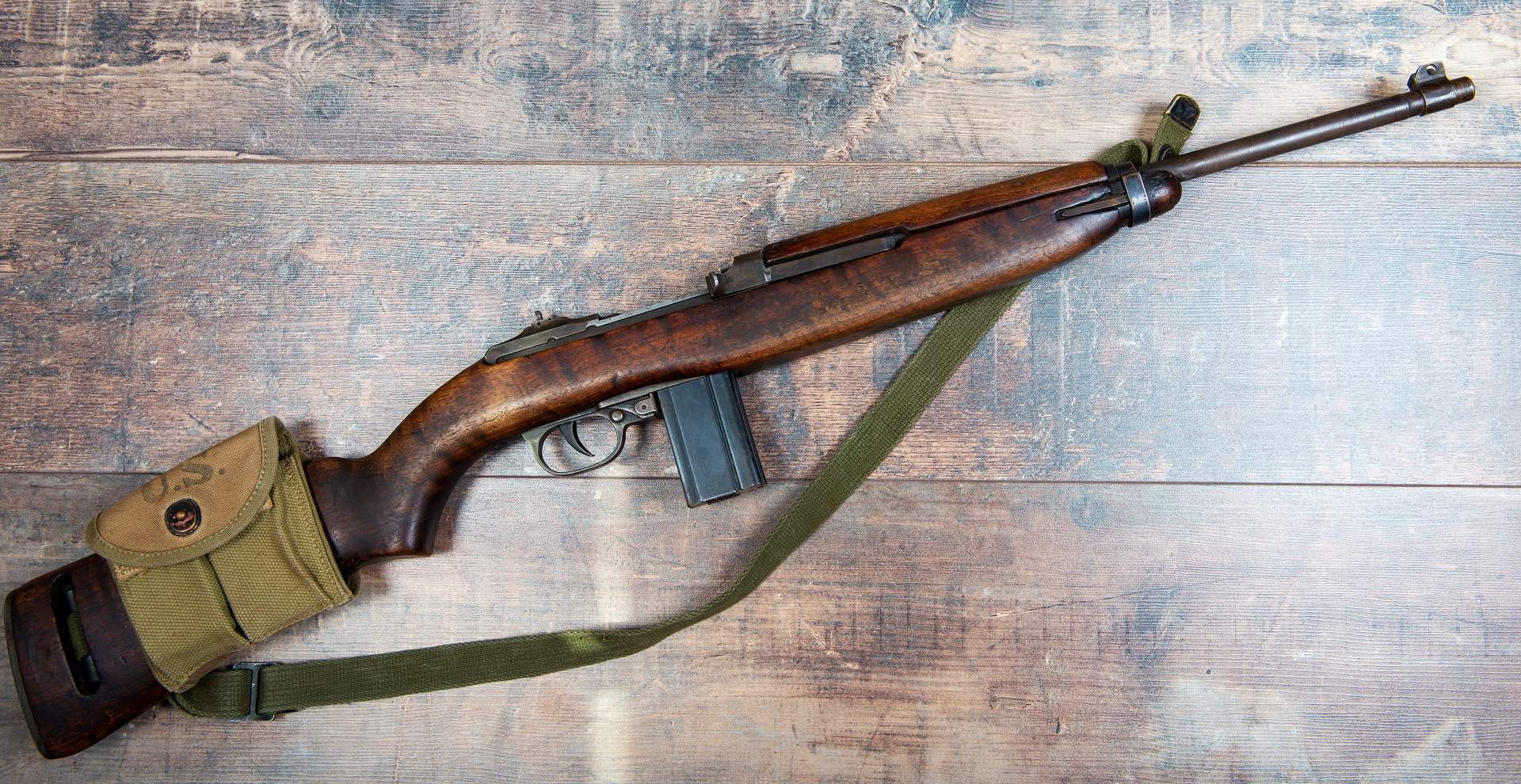
Rapid Fire and the Machine Age
Rapid-fire development deserves its own place in American firearms history. Gatling, Maxim, Browning, Thompson, and later designs changed the relationship between firearms and military doctrine. For collectors, these arms are often studied through surviving examples, manuals, parts, tripods, magazines, and demilitarized or semi-automatic variants.
| Era | Collector Examples |
|---|---|
| 19th century | Colt revolvers, cap-and-ball arms, early cartridge conversions, lever actions. |
| Civil War to frontier era | Springfield rifles, Spencer and Henry patterns, percussion-to-cartridge transitions. |
| Industrial / early 20th century | Winchester, Marlin, Savage, Smith & Wesson, Colt automatics. |
| World War era | 1911 pistols, BAR, Thompson, M1 Garand, M1 Carbine, Browning machine guns. |
| Postwar sporting era | Pre-64 Winchesters, classic Smith & Wesson revolvers, Browning and Remington sporting arms. |
Collector Takeaway
The most useful habit for a collector is to connect the object to the era. A firearm’s value is not only brand and condition. It is configuration, serial range, finish, original parts, documentation, and the historical reason the model mattered. The better your notes, photographs, and comparisons, the stronger your collection becomes as a reference library.
From My Bench
For collecting work, I keep a short list of reference books, humidity control, cleaning supplies, lighting, and bench gear that fit the way I document and maintain older firearms.
Browse My Gear ListAs an Amazon Associate I earn from qualifying purchases. I only link to products, books, tools, and accessories that fit the editorial purpose of Gun Collectors Club.

About Greg Cook
Greg Cook writes about firearms collecting, personal history, and the stories behind interesting guns. His Army MOS was 76Y, Unit Armorer, and he brings that practical background to his collector articles.