|
Firearms and their
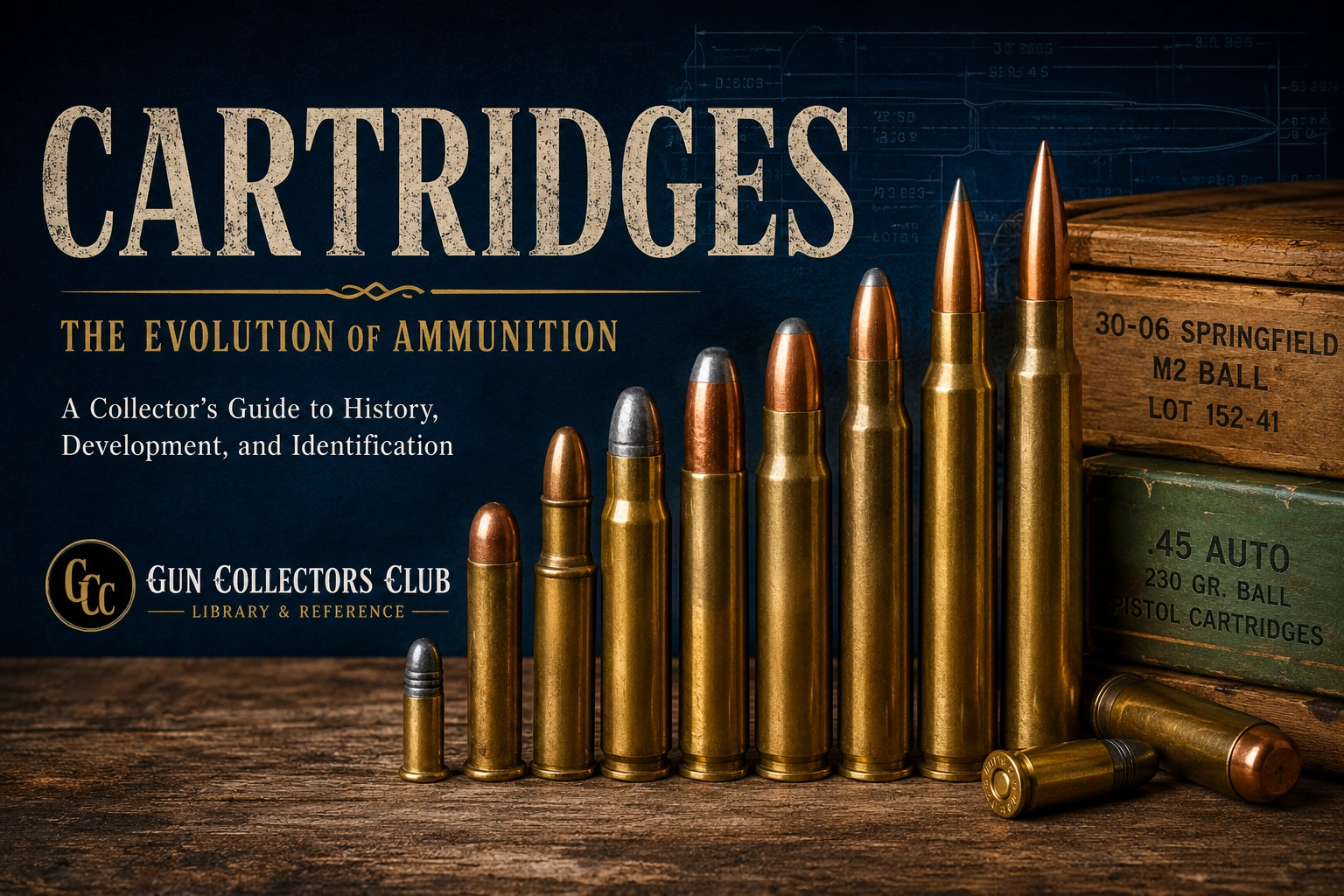
Closest Friends – The Cartridges
|

Pictured: .30-06 Ammo
The location of the primer depends on the type of
ammunition that is used, meaning center-fire or rim-fire. In the
past few years, there were several companies that became interested
in the production of electrically-fired cartridges. Blank cartridges
do not contain a bullet and they are widely used, for a diverse
number of reasons. |
No firearm would be complete without its cartridge.
Throughout time, firearms have undergone a lot of changes and
today’s modern American firearm industry does not make an exception.
And the same goes for cartridges. From the time they were first
made, there was room for improvement and manufacturers continue to
produce new and more desirable models. The cartridge is mainly a
metallic case that occupies the firing chamber of all firearms,
fitting the bullet, gunpowder and the igniting substance, called the
primer.
|
When a cartridge is going to be
manufactured, there are several things that must be taken in
consideration. First of all, the arm that it is going to be used on. Then,
the caliber of the bullet, usually measured in millimeters. Other
factors to consider include the weight of the bullet, the velocity,
length and type of igniting substance. All of them are extremely
important as they can determine the quality and the level of functioning
of the respective cartridge. And if you are wondering why cartridges are
always presented using two numbers, then you should know that the first
one represents the caliber of the cartridge and the second the length of
the cartridge case. Black powder cartridges are also introduced with two
numbers; in this case, one of them refers to the quantity of black
powder contained and the second to the caliber of the bullet.
Time has provided more types of cartridges than anyone could imagine. A
lot of important gun inventors and manufacturers have turned their
attention towards the production of ammunition, implementing their own
ideas or adding improvements to existing models. The two main types of
cartridges that are used up to this day remain the center-fire and the
rim-fire. There are also the electrically-fired cartridges, but there
are many discoveries to be made in that field before they become
completely functional. As for center-fire cartridges, these have the
igniting substance or the primer centrally located. The primer can be
replaced with ease, making from these cartridges quite an affordable
alternative. On the other hand, rim-fire cartridges have a far longer
history than the ones mentioned above. Today, they are not so widely used
but they’ve certainly had their golden times. The representative for
today’s rim-fire cartridge is the 22 long-rifle, which is quite popular.
As for recent discoveries in the field of rim-fire cartridges, a new 172
caliber was released on the market, being especially welcomed by
passionate target shooters and hunting enthusiasts. For them, the
increased speed and accuracy represent two of the key characteristics
that a firearm should present.
 |
Cartridges vary in length and diameter, being suitable for an
incredible number of rifles, pistols and other kinds of firearms.
There are many cartridges that have made it into the history books,
being invented by famous personalities or taking part in important
battles. From the rim-fire cartridges, as it was already mentioned
one of the most important one is the .22 LR or long-rifle cartridge.
A favorite of both hunters and target shooters, this cartridge has
also been fitted for small handguns used for defense purposes. They
are not as effective as center-fire cartridges but they have other
advantages over the firearms that use these cartridges. The arms for
which the rim-fire cartridges are fitted are usually small, can be
easily concealed and they are also cheaper to manufacture.
|
The 9mm includes a wide variety of
cartridges, used for both handguns and submachine guns. There are
various law enforcement agencies, military forces and even civilians
that carry guns for protection purposes who prefer the 9mm cartridges.
The guns that fire that cartridge are perfect for self-defense, being
less harmful for the attacker. As for cartridges that are especially
used by the military, during special assault operations, there is the
5.56 x 45mm cartridge. Fitted for both standard assault rifles and also
for smaller machine guns, this cartridge has been especially adapted
after the .223 Remington.
Other famous cartridges include the 7.62 x 51mm cartridge, utilized for
sniper rifles and various machine guns of medium size. The .30-06 (7.62 x
63mm) is the cartridge after which the one mentioned above was modeled. It is
the standard cartridge used by the American army and today it is widely
used by hunters as well. As for new rimless center-fire cartridges, the
.338 Lapua (8.6 x 70mm) is more than representative, being particularly
adjusted for sniper rifles. It offers long-range shooting and it is a
favorite of many hunters and target shooting enthusiasts. And as the
history of American firearm cartridges could not be complete without the presence
of important organizations such as NATO, we should present some of the
cartridges that are fitted for NATO’s rifles. The 7.62x51mm, the .30-06
and the .50 Browning for machine guns represent just three examples. The
last cartridges are intended to be used in various military operations
but they are also used by those who practice target shooting.
As for where blank cartridges stand, these do not contain projectiles
and they are mainly used for training purposes. The most important thing
that one must remember about blank ammunition is that they can still do
harm if you stand too close to the shooting range. Blank cartridges have
been also used for the launching of rifle grenades and other types of
bombs, and even in the training of gun dogs.
There are many cartridges that have remained as famous inventions of the
American firearm history. One of the many that fit that list is the .45
Colt cartridge, developed and perfected by the United States Army in 1872.
Made after an already famous British cartridge, the .45 Colt cartridge
was adapted for the single-action revolver and was used until in 1877
when newer technologies were implemented. The black powder cartridge was
replaced in 1892 with the .38 Colt cartridge but it had its time of
glory. It contained almost 40 grains of black powder and had a 255 grain
lead bullet. Its velocity was 300 m/s and the cartridge offered an
incredible energy. The .45 Colt cartridge was extensively used during
those times especially since it was incredibly accurate. And history was
going to reintroduce the cartridge, this time adapted for hunting guns
and big game shooting. Today, it is still used for derringers and also
for certain other guns.
Winchester cartridges have also played an important role in the American
gun and cartridge making industry. From all the cartridges manufactured
under that name, the .32-20 is one of the most popular produced
especially for the lever-action firearms. Introduced in 1882 as a black
powder cartridge, it was a favorite of passionate small game hunters.
When Colt produced a single-action gun especially made for that
cartridge, it became even more popular. The two main advantages of the
.32-20 were its ease of use and affordable reload opportunity. The .30-30
Winchester cartridge was one of the first cartridges especially made for
1894 lever-action rifle. The innovation was represented by the smokeless
powder used, opening a new era for the sporting rifle cartridges.
Perfect for deer hunting, the .30-30 Winchester cartridge has a shooting
rage of approximately 200 m and was incredibly effective. The bullets
weighed between 150 and 170 grains and the cartridge was particularly
popular for having easy recoil. Today, the .30-30 is one of the most
famous center-fire rifle cartridges ever manufactured, being part of the
modern cartridge production and industry.
Incredible as it seems, the first cartridges ever made date from the
16th century. They stand today as a testimony of how farther the
history of ammunition has traveled, even though they primarily consisted
of powder and bullets wrapped in a paper tube. During the ages, the
cartridge has constantly evolved and improved. The production increased
even more with the American Civil War and the introduction of the
breech-loading rifle and other modern firearms. Central-fire cartridges
became increasingly used for sporting rifles as well, being accurate and
extremely powerful. And so long as the history of American firearms is
written, so will be the one of cartridges and firearm ammunition!
|
 
NEW!
"Gun News" section of guncollectorsclub.com, where you can read about and comment on Gun
News
|
Semi-Autos: |
|
 |
Colt Mustang:
.380 caliber, baby 1911 - DOM 1992, real mop. |
 |
1908 Colts: 24kt
gold plated, fully engraved with mother of pearl. |
 |
1911 Colt:
For nine
decades the Colt Government Model 1911 has been without challenge
the most ... |
 |
Colt Officer's Model:
Slightly smaller than a Government Model, with the barrel length
reduced from 5" to 3.5". |
 |
Browning .25 Caliber
Automatic Pistol: The 1968 Gun Control Act stopped the
importation of these guns. |
 |
Colt 1903 Pocket
Hammerless .32: Produced from 1903 to 1945. |
 |
Colt 1908
Hammerless .25 (Vest Pocket) Model N was made in 1916. |
|
Revolvers: |
|
 |
Colt .32 Detective Special:
Made in 1950, this gun is chambered in the .32 New Police cartridge
(.32 S&W Long). |
 |
1965 Colt Python:
Pythons produced from 1955 to 1969 have no letter in
the serial number and are the most desirable to collectors. |
 |
Peacemaker:
The Colt
Single Action Army - this is a first generation gun. |
 |
1962 Colt Python:
Pythons produced from 1955 to 1969 have no letter in
the serial number and are the most desirable to collectors. |
 |
Detective Special: One of the most well known and most
copied guns in the world. |
 |
Colt Cobra: It was an
earlier version of this gun Jack Ruby used to kill Lee Harvey
Oswald. |
 |
Ruger .22 Single Six: Commonly referred to as a "Flat
Gate". |
| Holsters: |
|
 |
Gun Holsters and
Various Methods of Carry: The holster is a very important
part of "concealed carry". |
 |
Holster Gallery:
Pictures of holsters that I have found to be of good quality as well
as design, functional, easy to use and a good value. |
 |
Long Gun
Leather: Gun cases that are good for transporting long guns. |
| Rifles: |
|
 |
Colt Sauer Rifle:
Bolt Action, 30.06 caliber, 24" bbl., magazine capacity 3 or 4 rounds. |
 |
Winchester .30-30:
Lever Action, 30.30 caliber, saddle gun. |
 |
Savage Model 24J:
This Savage Model 24J O/U Combination Gun is a .22 Magnum Rifle and
.410 Gauge Shotgun combined. |
|
Shotguns: |
|
 |
Ithaca 4E
Flues Single-Barrel Trap (1914 - 1922) |
 |
Ithaca 4E
NID (New Improved Design) 1922 - 1944 |
 |
Browning A-5:
Auto 16
gauge short bbl, stamped U.S. Property. |
 |
Remington Model 90-T:
A Single-Shot 12 Gauge Trap gun with a 34" bbl, Full Fixed Choke,
low vent rib and adjustable comb stock. |
 |
Remington Pump: Pump action 12
gauge with stamped patent dates... |
 |
Abercrombie & Fitch: 12 Gauge, Single Shot, 32" bbl.,
full fixed choke, made by Renato Gamba for Abercrombie & Fitch about
1978. |
|
Knives: |
|
 |
OldPocketKnives.net:
A website where you can buy old pocket knives. |
|
Ads: |
|
|