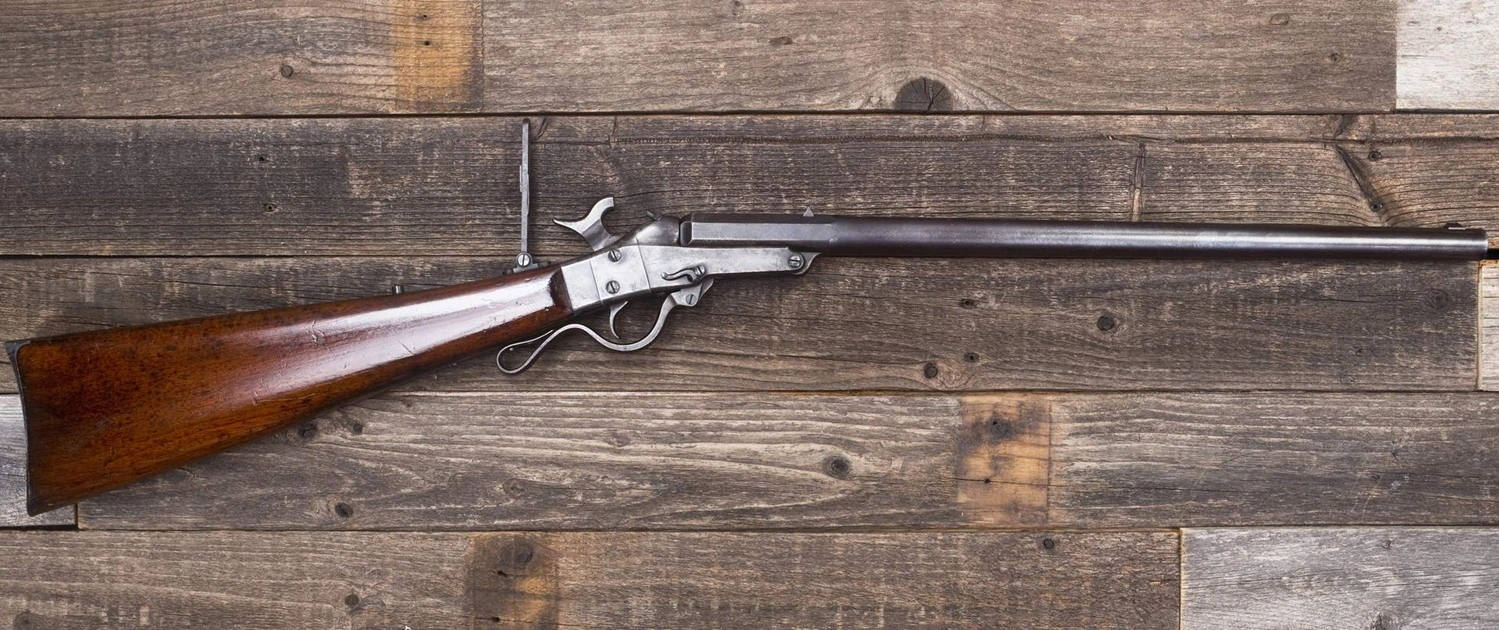
Gun Inventors and Firearm Innovation belongs in the Gun Collectors Club Reference Library because it helps place individual firearms inside a larger collector story. A firearm is never only a make, model, caliber, or serial number. It is also the result of a design problem someone tried to solve, a factory that had to build it, and a market or military customer that decided whether the idea deserved a future.
For collectors, inventor names become useful landmarks. Browning points to practical mechanical genius across pistols, rifles, shotguns, and automatic arms. Colt points to the commercial rise of the revolver and the industrial methods that made repeating handguns a mass-market product. Luger points to mechanical elegance and instantly recognizable form. Maxim points to the automatic age. Marlin and Savage point to competing lever-action traditions that still shape what collectors look for on a rifle rack.
Collectors make better decisions when model details are connected to history, production changes, and design intent.
Why Gun Inventors Matter to Collectors
Many collectible firearms are best understood as the work of individual designers solving specific mechanical problems. Feeding, locking, extraction, ignition, recoil control, portability, safety, strength, and manufacturing efficiency all required invention. A gun that seems ordinary today may have been important because it made one of those problems practical at scale.
Inventor-based collecting also gives structure to a collection. Instead of buying random examples, a collector can follow a design lineage: Browning sporting arms, Colt revolvers, Marlin lever actions, Luger pistols, Savage hammerless rifles, Smith & Wesson cartridge revolvers, Winchester lever actions, or Springfield Armory military rifles. That approach turns a group of firearms into a story.
The inventor connection can also explain value. A common production gun may still be desirable if it represents a milestone design, an early production variation, a patent-marked example, a short-lived factory relationship, or a model that influenced later arms. Conversely, a famous name does not automatically make every example valuable. Condition, originality, configuration, rarity, and documentation still control the collector conversation.
From Patent Drawing to Production Gun
Firearm invention did not end when a patent was issued. The patent drawing was only the first step. A working prototype had to be made reliable, simplified for production, adapted to available ammunition, and manufactured at a price that buyers would accept. Some inventors were brilliant mechanics but poor businessmen. Others, like Samuel Colt, understood promotion, capital, factory scale, and the power of government contracts.
This distinction matters when reading markings. Patent dates, address lines, model names, proof marks, factory rollmarks, and contract markings can point to a specific stage in a design’s life. Early patent markings may indicate a developing design. Later markings may show standardization, export production, military acceptance, or a change in ownership. For a collector, the story is often hiding in the metal.
Manufacturing partners also matter. Browning designs appeared under several major names. Winchester, Colt, Fabrique Nationale, Remington, and Savage all intersected with Browning’s work at different points. A collector who recognizes the designer behind the trade name can understand why seemingly unrelated guns may share mechanical DNA.
John Moses Browning: Practical Design Across the Whole Field
John Moses Browning may be the most important firearm designer in history because his influence crossed so many categories. He worked on lever-action rifles, pump shotguns, semi-automatic pistols, machine guns, sporting arms, and military designs. The Winchester Model 1894, Browning Auto-5, Colt 1911, Browning Automatic Rifle, and many other arms connect directly to his influence.
Browning’s collector appeal comes from practical elegance. His best designs tend to solve problems without unnecessary complexity. They were not merely interesting mechanisms; they were durable systems that factories could build and shooters could understand. That combination explains why so many Browning-related guns remained in production, influenced later designs, or became collector categories of their own.
Why Browning Designs Stay Collectible
A Browning-designed firearm can be collected by model, maker, period, military use, sporting role, or mechanical type. A Winchester lever action tells one part of the Browning story. A Colt 1911 tells another. A Browning Auto-5 shows how a sporting shotgun could become a long-lived mechanical landmark. For collectors, Browning is not one shelf. He is an entire map.
Samuel Colt: The Revolver as Business System
Samuel Colt did not simply sell a repeating handgun. He helped turn the revolver into an industrial product and a cultural symbol. His early revolving-cylinder arms struggled for acceptance, but the idea became commercially powerful once practical designs, military interest, improved manufacturing, and aggressive promotion came together.
Colt’s importance to collectors rests on more than the mechanical idea of a revolving cylinder. His story includes patent protection, factory production, display pieces, military contracts, presentation arms, address markings, and the shift from percussion revolvers to metallic-cartridge revolvers. That is why Colt collecting often becomes a study of both mechanical evolution and American industrial history.
When evaluating Colt-related firearms, collectors look closely at barrel addresses, cylinder scenes, patent lines, finish, grips, serial-number ranges, and whether the gun remains in its original configuration. The name is famous, but the details decide the gun.
John Marlin, Arthur Savage, and Lever-Action Alternatives
John Marlin belongs in any serious conversation about American gun inventors and manufacturers because Marlin rifles gave collectors a parallel tradition to Winchester. Marlin’s appeal is not just that the company made lever actions. It is that Marlin lever actions developed their own feel, receiver shape, ejection pattern, model progression, and collector vocabulary.
The Marlin story also reminds collectors that a company’s identity can be shaped by more than one designer. John Marlin established the foundation, while later engineers and production changes influenced what collectors now recognize as classic Marlin characteristics. That is why model-specific research matters so much with Marlin rifles. A small change in receiver, barrel marking, chambering, stock style, or sight setup can separate an ordinary example from a more desirable variation.
Savage Arms adds another branch to the lever-action tree. Arthur Savage’s rifle designs moved away from the familiar exposed-hammer profile and gave collectors a distinctive hammerless sporting rifle lineage. The Savage 1895 and 1899/99 family became famous for clean handling, distinctive magazine engineering, and a profile that looked different from Winchester and Marlin rifles on the same rack.
For collectors, Marlin and Savage are especially useful comparisons. Both brands show how American sporting rifles evolved beyond a single pattern. Each has loyal collectors, recognizable mechanical identity, and model variations that reward careful study.
Georg Luger, Hiram Maxim, and the Mechanical Signature
Georg Luger refined a pistol whose appearance became inseparable from its mechanism. The toggle-lock silhouette, grip angle, and military associations made the Luger one of the most recognizable collector pistols in the world. Luger collecting is a reminder that form can become history. Even people who do not collect military pistols often recognize the outline.
Luger collectors pay close attention to maker codes, chamber dates, proof marks, unit markings, matching numbers, magazine details, and refinishing. The design is famous, but the value of an individual pistol depends on originality and documentation.
Hiram Maxim represents a different kind of invention: the move into automatic fire. His work changed military thinking and pushed firearms design into a new era of recoil-operated mechanical systems. For a collector reference page, Maxim matters because he marks a turning point. Earlier rapid-fire arms often depended on hand operation. Maxim’s concept showed that a firearm could use its own firing cycle to continue operating.
The collector lesson is broad: some inventors are remembered for one iconic shape, while others are remembered for changing the entire direction of firearm technology.
John C. Garand, John T. Thompson, and Military Engineering
Not every important inventor became famous through the commercial sporting market. John C. Garand is remembered for the M1 rifle, a military arm whose reputation rests on practical engineering, production scale, and service history. The M1 Garand is collectible because it combines inventor identity with arsenal production, serial-number study, drawing-number research, stock cartouches, rebuild marks, and military provenance.
John T. Thompson’s name became attached to the Thompson submachine gun, another example of how an inventor or promoter can become inseparable from a firearm’s identity. In collector terms, Thompson-related arms bring together patent history, Auto-Ordnance markings, military contracts, law-enforcement history, and cultural recognition.
Military engineering often produces deep collector categories because government acceptance created paperwork, inspection marks, arsenal rebuilds, and production changes. Those records give today’s collectors ways to verify, compare, and explain individual examples.
Collector Perspective: Building an Inventor-Based Collection
Inventor-based collecting works best when it is focused. A collector might choose one designer, one company lineage, one mechanical idea, or one period of transition. For example, a Browning-focused collection could compare sporting shotguns, military pistols, and lever-action rifles. A Colt-focused collection could follow the revolver from percussion to cartridge. A lever-action collection could place Winchester, Marlin, and Savage side by side.
Condition still matters. Provenance still matters. Original finish, correct parts, and documented configuration still matter. The inventor connection gives the collection meaning, but it does not replace careful inspection. A gun with a famous designer behind it can still be a poor buy if it has been refinished, altered, mismatched, or represented incorrectly.
Good inventor-based research usually starts with five questions: Who designed it? Who manufactured it? What problem did it solve? How did the design change during production? And what details prove that this specific example is what the seller claims it is?
| Collector Question | Why It Matters |
|---|---|
| Who designed it? | Designer identity can explain the mechanism, the collector appeal, and the model’s place in firearm history. |
| Who actually manufactured it? | Many famous designs were built by partner factories, licensed makers, contractors, or later corporate owners. |
| What problem did it solve? | Great designs usually solve a real field, military, sporting, or manufacturing problem. |
| Was it commercially successful? | Success affects availability, variations, replacement parts, documentation, and collector familiarity. |
| Did it influence later guns? | Influential designs often remain collectible even when production numbers were high. |
| Are the markings correct? | Patent dates, barrel addresses, proof marks, factory codes, and serial ranges can confirm or challenge a seller’s description. |
| Is the configuration original? | Refinished metal, changed sights, replaced grips, altered stocks, and mixed parts can reduce collector value. |
| Is there provenance? | Factory letters, military records, family history, receipts, and photographs can add confidence and context. |
Collector Insight
A great gun is often a mechanical biography.
The best collector guns tell the story of a designer’s solution: Browning’s practicality, Colt’s commercial instinct, Luger’s mechanical elegance, Maxim’s battlefield revolution, Garand’s military engineering, Marlin’s lever-action identity, or Savage’s willingness to rethink the sporting rifle.
Related Reading
Build Your Reference Shelf
Library articles are strongest when paired with good books, careful photos, magnification, and a patient research process. I keep a curated list of reference books and collector tools for this kind of work.
Shop My LibraryAs an Amazon Associate I earn from qualifying purchases.
Keep researching: To connect these inventors to dedicated collector pages, continue with John Marlin, Samuel Colt, and Savage Arms before comparing serial numbers, markings, production details, and model variations.

About Greg Cook
Greg Cook writes about firearms collecting, personal history, and the stories behind interesting guns. His Army MOS was 76Y, Unit Armorer, and he brings that practical background to his collector articles.