Colt 1903 Pocket Hammerless .32 ACP belongs in the collector conversation because it connects John Browning design, Colt manufacturing, period use, and the kind of condition details that make an individual pistol more than a serial number.
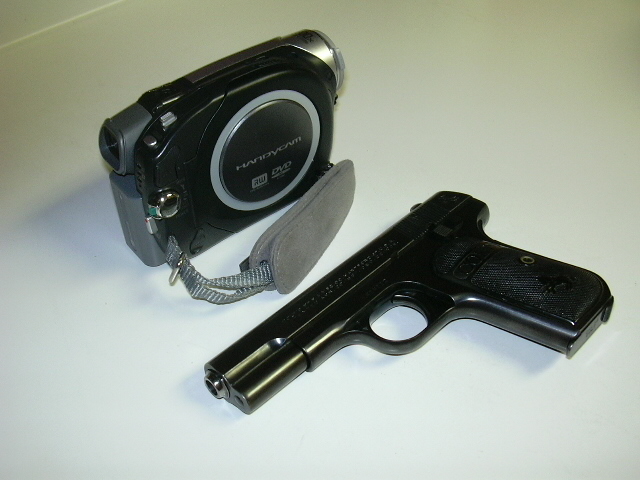
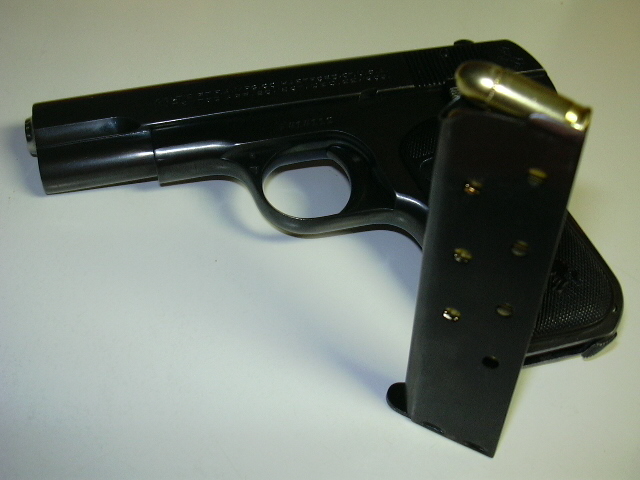
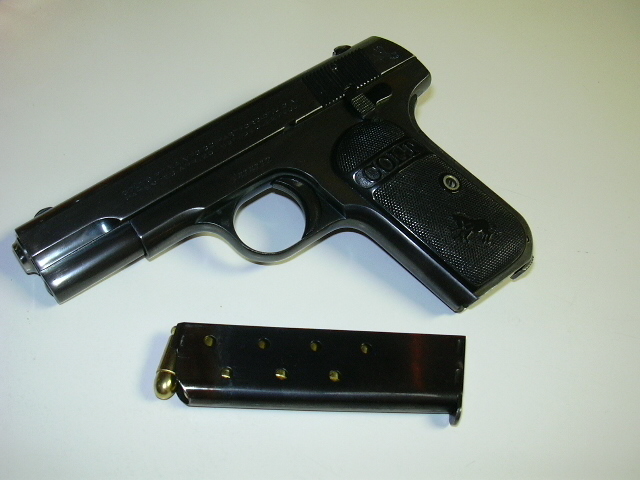
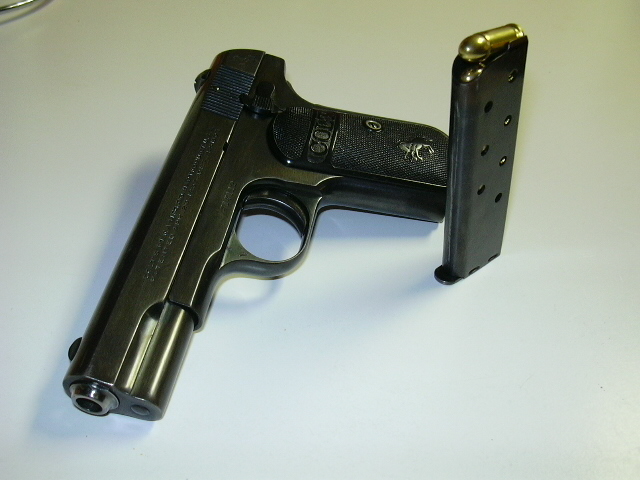
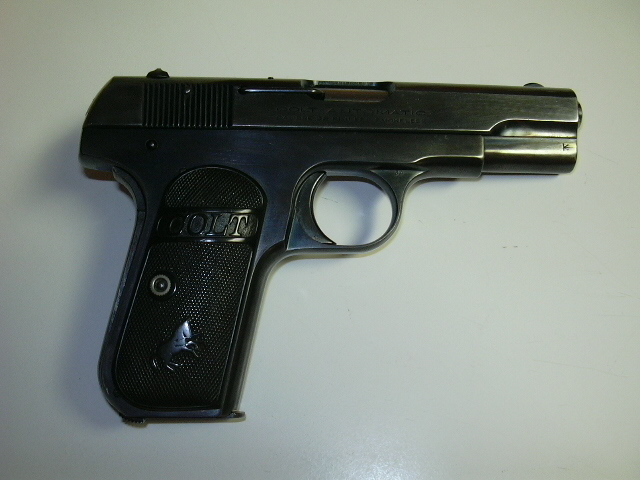
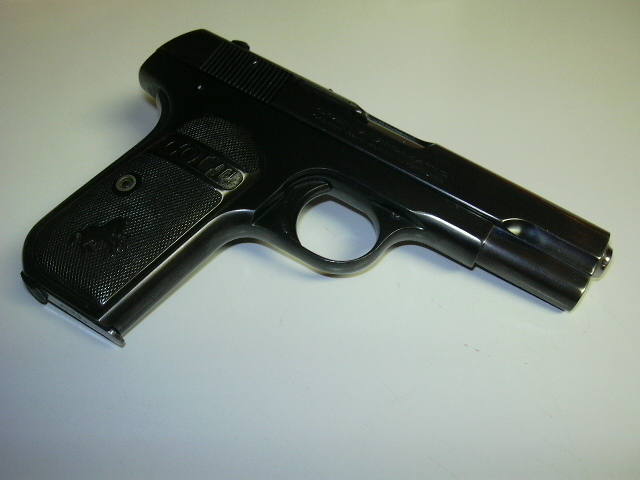
This Colt 1903 Pocket Hammerless .32 ACP Model M, Type III was manufactured in 1922. It holds 9 rounds, 8 in the magazine plus 1 in the chamber. The .32 ACP round is also known as the 7.65 mm.
Humphrey Bogart used a similar gun in "Casa Blanca", "Key Largo" and "The Big Sleep" all in the 1940s. Bogart also used one in his next-to-last film "The Desperate Hours" in 1955.
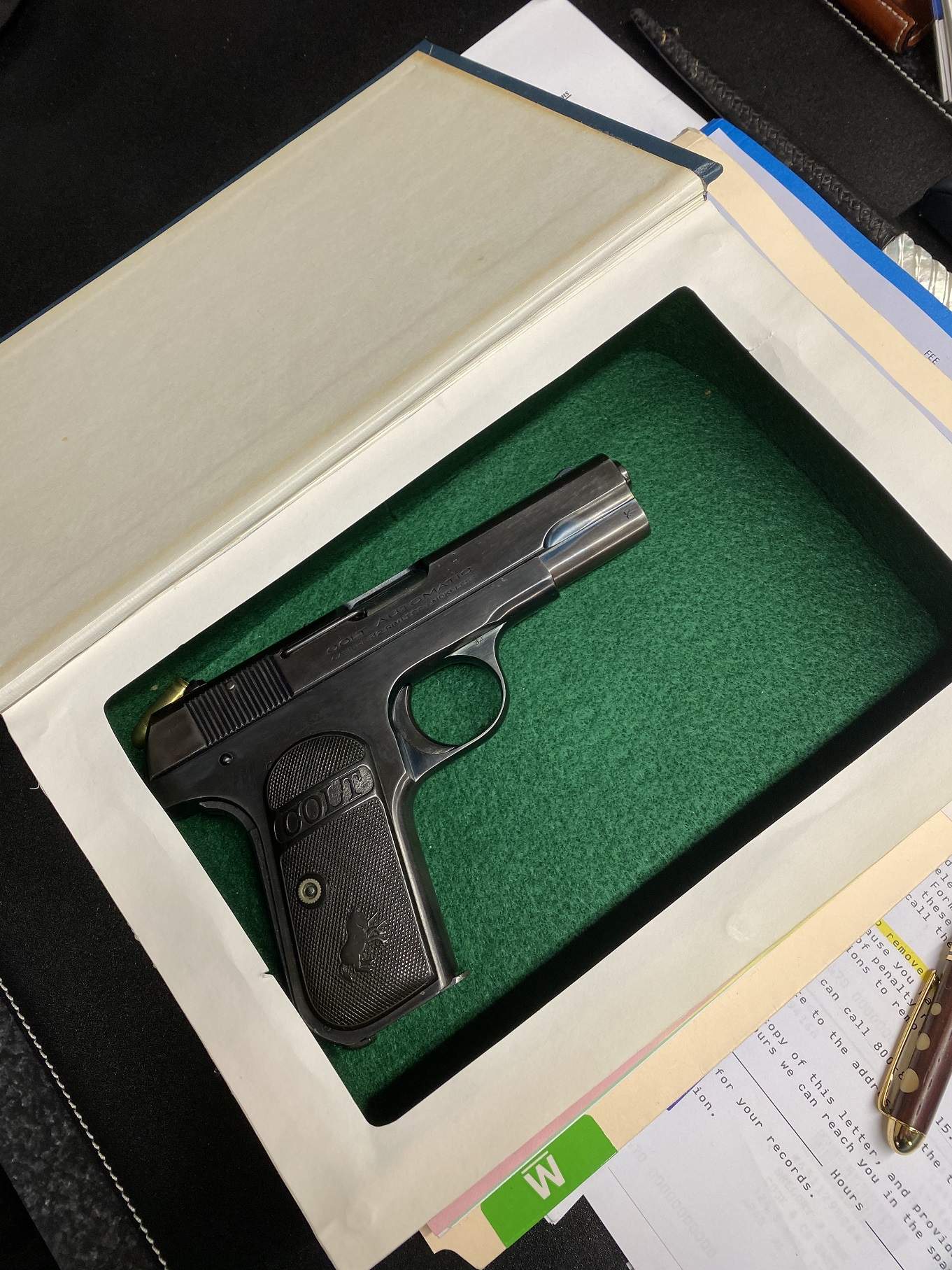
According to the Colt Archive Letter, my gun was one of fifty guns shipped to Shapleigh Hardware Company in St. Louis, Missouri on August 8, 1922. This design is another of John Browning's patents. I really don't know why Colt stopped producing them. I think the production numbers were around 570,000. Colt also made a .380 version of this design starting in 1908 and produced more than 130,000 of those guns.
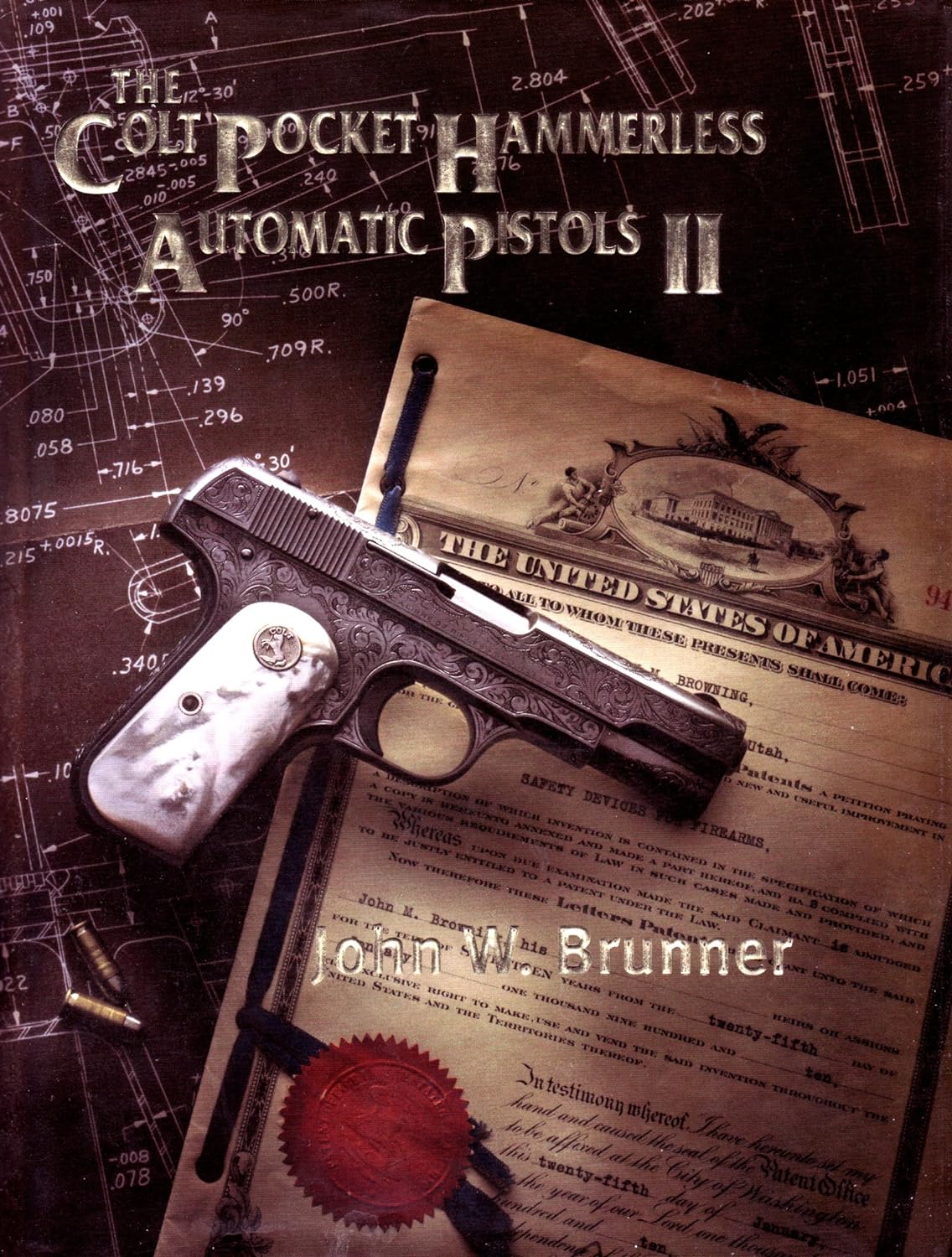
Colt 1903 Pocket Hammerless .32 ACP Model M, Type III: This gun was manufactured in 1922. It holds 9 rounds, 8 in the magazine plus 1 in the chamber. The .32 ACP round is also known as the 7.65 mm.
The Colt 1903 Pocket Hammerless .32 caliber (or 7.65 mm) was manufactured by Colt in Hartford, Ct from 1903 until 1945. The price of these guns varies depending on condition, features and history with provenance. This gun was one of the last issued with checkered hard rubber grips with the "Rampant Colt" molded into them. In 1924 the grips were changed to checkered walnut with the Colt medallions.
I won't be much help in dating one of these guns with a serial number above 543000. REQUEST: If you own one of these Colts from WWII production years and have a Colt Authentication Letter confirming the ship date, please share on my Facebook page.
Note: ACP is the acronym for Automatic Colt Pistol. The name "Pocket Hammerless" is misleading in that the gun is not truly hammerless, but features a concealed hammer to prevent snagging on clothing. Humphrey Bogart used a similar gun in "Casa Blanca", "Key Largo" and "The Big Sleep" all in the 1940s. Bogart also used one in his next-to-last film "The Desperate Hours" in 1955.
This is another gun that was designed by John Browning. These guns were used by the Office of Strategic Services (OSS), precusor of the CIA, during WWII. They were also issued to all General Officers of the United States Armed Forces from the 1940s until 1972. The Pocket Hammerless: Was the best conceal carry gun of it's time. Many famous gangsters from that era used this gun; Al Capone, John Dillinger, Willie Sutton, Bonnie and Clyde.
I paid $500 for this re-blued gun in 2006. I bought it to be a "shooter", not a collectible gun. These guns can be highly collectible, it just depends on condition and provenance. In my personal opinion these guns should be worth 2 to 3 times current market value, unfortunately it is just not the case.
Collector Takeaway
Why the 1903 Still Matters to Collectors
The Model M is small enough to seem ordinary at first glance, but it ties together Browning design, Colt manufacture, period carry culture, and the paper-trail details that make an individual pistol memorable.
Production Years
The Colt 1903 Pocket Hammerless .32 ACP was introduced in 1903 and remained in original Colt production through 1945. For collectors, the story is not just the first and last year; the important question is where a pistol falls in the transition years, because the barrel arrangement, grip material, magazine safety, sights, finish, and military markings can all change how the gun is evaluated.
| Production Topic | Collector-Focused Notes |
|---|---|
| First year produced | 1903, with early Type I pistols using a separate barrel bushing and a 4-inch barrel. These early examples are especially interesting when the hard rubber grips, early markings, and original finish remain intact. |
| Last year produced | 1945 for original Colt Model M production. A pistol may have post-war military issue history or later paperwork, but that is different from post-war factory production. |
| Major production changes | The major milestones are the shorter 3 3/4-inch barrel around the Type II period, the integral barrel bushing/lug around the Type III period, the magazine safety introduced with Type IV, and the late-war military-style changes associated with Type V and U.S. Property-marked pistols. |
| Pre-war vs wartime differences | Pre-war examples are most often evaluated as commercial Colts, with blue or nickel finish, grip style, serial range, and originality driving interest. Wartime examples add military procurement questions: U.S. Property marks, ordnance inspection details, phosphate/Parkerized-style finish on late guns, and documentation. |
| Transition years collectors should know | 1908, 1910, 1924, 1926, and 1944-45 are especially useful search terms and inspection points. These are the years where barrel length, barrel bushing style, grips, magazine safety, and military features are most likely to affect identification. |
A good rule is to identify the pistol by serial number first, then confirm the physical features. Do not assume a part is wrong simply because it looks different from another 1903; this model changed gradually across a long production run.
Variants
Collectors usually divide the Model M .32 ACP into five broad types, while also paying attention to finish, grips, markings, and shipment history. The .380 ACP Colt 1908 Pocket Hammerless is the close companion model, but it should be valued and documented separately from the .32 ACP 1903.
Barrel lengths and type features
- Type I: early separate barrel bushing with a 4-inch barrel. These are the classic early-production examples and are desirable when original finish and early grips survive.
- Type II: separate barrel bushing with the shorter 3 3/4-inch barrel. This is an important transition between the earliest 4-inch guns and the later integrated-bushing pattern.
- Type III: integrated barrel bushing/lug with 3 3/4-inch barrel. This is the type of the 1922 pistol shown on this page and is one of the most familiar collector configurations.
- Type IV: integrated barrel bushing with magazine safety. These later commercial pistols often appear with walnut grips and Colt medallions.
- Type V and late military production: late-war pistols can show larger sights, different slide serration count, U.S. Property markings, ordnance inspection marks, and phosphate/Parkerized-style finish depending on serial range and procurement history.
Finishes, grips, and rare configurations
Standard commercial finishes were blue and nickel. Special-order or presentation examples may be encountered with factory engraving or non-standard finishes, but those claims should be supported by documentation because aftermarket refinish work can look impressive while hurting collector value.
Grip type is a major clue. Early pistols commonly wore checkered hard rubber stocks with molded Colt details. Around the mid-1920s, checkered walnut stocks with Colt medallions became standard. Ivory, mother-of-pearl, and other special-order stocks exist, but original paperwork or a Colt Archive Letter is the best way to separate factory originality from later embellishment.
Law enforcement, military contracts, and special markings
The Model M had a long civilian life, but wartime and agency use gives certain pistols extra interest. U.S. military procurement, U.S. Property marks, crossed-cannon ordnance marks, documented OSS or SOE context, and later general-officer issue history can all raise collector interest. The key word is documented; military-looking finish or a story passed down with the pistol is not the same thing as a letter, record, or verified marking.
Serial Number Ranges
Serial numbers are the starting point for dating a Colt 1903, but they are not the finish line. Colt itself cautions that serial lookups are approximate and that a Colt Archive Letter is the better tool when legal, valuation, or historical certainty matters. For this model, serial number, type features, grips, finish, and documented shipping records should all agree before assigning a confident collector description.
| Approximate Range / Cluster | Common Collector Interpretation |
|---|---|
| 1-71,999 | Early Type I production. Look for the 4-inch barrel, separate barrel bushing, early markings, and early hard rubber grips. |
| 72,000-105,050 | Type II transition period. The pistol retains a separate barrel bushing but moves to the 3 3/4-inch barrel. |
| 105,051-468,789 | Type III era. Integrated barrel bushing/lug and 3 3/4-inch barrel. The 1922 Shapleigh Hardware example on this page falls in this broad collector family. |
| Late 468,000 range into WWII | Type IV and Type V overlap can create transition questions. Confirm magazine-safety presence, sight style, slide serrations, finish, and markings rather than relying on one table alone. |
| WWII high-serial examples | U.S. Property marks, ordnance marks, and late phosphate/Parkerized-style finish can appear on military-procured examples. Documentation is especially important because these pistols command more collector attention. |
| Above 543,000 | Use extra caution. Your existing WWII dating note remains important: serial tables become less tidy in the late-war period, and a Colt Authentication or Archive Letter is the best support for a ship date. |
Collector-observed ranges are useful for sorting examples into likely types, but they should not replace a careful inspection. When the serial range and features disagree, treat the gun as a research project rather than forcing it into a chart.
Collector Notes
The 1903 Pocket Hammerless rewards slow inspection. It is easy to admire the shape and miss the details that determine whether a pistol is a shooter-grade example, an honest original, or a documented high-premium collectible.
- Fit and finish quality: Original Colt polish and blue are major value drivers. Rounded markings, soft edges, or a finish that looks too modern can suggest rebluing.
- Accuracy characteristics: The design has a reputation for good practical accuracy, but the tiny sights remind you that it was built as a compact pocket pistol rather than a target arm.
- Desirable years: Early Type I pistols, clean 1920s commercial examples, mid-1920s grip-transition guns, and late documented military examples all draw collector attention for different reasons.
- Desirable barrel lengths: The 4-inch Type I barrel is an early-production feature. The later 3 3/4-inch barrel is standard for most surviving examples and should not be dismissed as less correct.
- Rare markings: U.S. Property markings, ordnance marks, police inventory marks, special-order engraving, and retailer or agency documentation should be photographed and researched before making value assumptions.
- Factory errors and anomalies: Treat unusual markings, mismatched features, or odd finish as questions, not automatic premiums. Factory letters and expert comparison matter.
- Packaging differences: Original box, instruction sheet, hang tags, and correct magazines can dramatically improve a collector package. Box condition also matters because water damage, mismatched labels, and reproduction packaging can confuse value.
- What collectors look for: Correct grips, sharp slide markings, original magazine, honest wear, matching period features, documented shipment details, and a story that can be supported.
Known Issues
For a collector page, “known issues” does not mean a gunsmithing manual. It means the problems that commonly affect condition, originality, confidence, and value. Any old pistol intended for firing should be inspected by a qualified professional before use.
| Issue | Collector Impact |
|---|---|
| Finish wear and pitting | High-edge wear can be honest and attractive, but deep pitting, especially under a reblue, can move a pistol from collectible to shooter-grade quickly. |
| Reblued or over-polished metal | Rounded lettering, washed-out Rampant Colt markings, and softened edges reduce confidence. A reblue may still make a fine shooter, but it usually lowers collector value. |
| Grip cracks or replaced stocks | Hard rubber can shrink or crack, and walnut stocks can be swapped. Grip style should match the pistol’s serial range and type. |
| Magazine problems | Correct original magazines add value. Incorrect, worn, or aftermarket magazines can create function complaints and should not be ignored during evaluation. |
| Parts availability | Some type-specific parts are harder to source than others. A missing or altered early barrel/bushing detail can be expensive to correct and difficult to authenticate. |
| Early vs late production confusion | Late sights, slide serrations, magazine safety features, U.S. Property markings, and phosphate/Parkerized-style finishes must be judged in serial-number context. |
| Known recalls | No broad factory recall surfaced in the collector references used for this page. Treat individual mechanical concerns as condition issues and have them evaluated professionally. |
Value Trends
Exact prices change with the market, but the value pattern is consistent: originality, condition, documentation, and scarcity create the premium. Shooter-grade and refinished examples can remain affordable compared with other early Colts, while documented military, early Type I, factory-engraved, factory-nickel, boxed, or special-order examples can move much higher.
- Values have risen since 2020: Interest in early Colt automatics, Browning designs, and Curio & Relic pistols has kept clean examples in demand.
- Early models command a premium: Type I pistols, low serial numbers, and early features attract collectors who want the beginning of the Model M story.
- Nickel and special finish premiums vary: Factory nickel, engraving, or special-order stocks can add value, but only when the work is original or convincingly documented.
- Box and papers dramatically increase value: Original box, instructions, correct magazine, and archive paperwork can turn a nice pistol into a stronger collector package.
- Reblue penalty: A clean reblue may look good, but most advanced collectors prefer honest original wear over polished-away markings.
The best valuation method is to compare recent sold prices for pistols with the same type, condition, originality, accessories, and documentation. Asking prices are useful clues, but sold examples are better evidence.
Research Sources Consulted
This expansion used the section plan from the uploaded Word document and cross-checked collector details against external references. The links below are included as reader research starting points, not as a substitute for a Colt Archive Letter on a specific firearm.
Collector Checklist
| Feature | Why It Matters |
|---|---|
| Type and serial range | Confirm the Type I-V features and compare the serial number to a trusted reference before assigning a production year. |
| Finish and grips | Look for signs of refinish, replaced stocks, polished markings, or mismatched wear patterns. |
| Magazine and small parts | Original magazines, safeties, sights, and grip details can affect collector confidence. |
| Provenance | Archive letters, shipping records, old receipts, and family history help separate documented history from guesswork. |
Value Factors to Preserve
For the 1903, collector interest often depends on originality, documented shipment information, special order features, condition, and whether the gun still presents as an honest period Colt rather than a polished-up shooter.
Common Collector Mistakes
- Assuming every clean example is factory-original without checking finish and markings.
- Ignoring the difference between a documented story and an undocumented story.
- Overlooking incorrect magazines, changed grips, or altered small parts.
- Using a serial table as the only source when a Colt Archive Letter could add shipment context.
Related Reading

About Greg Cook
Greg Cook writes about firearms collecting, personal history, and the stories behind interesting guns. His Army MOS was 76Y, Unit Armorer, and he brings that practical background to his collector articles.