The Colt Detective Special is one of the classic American snubnose revolvers. Introduced in 1927, it grew out of the Colt Police Positive Special, became a favorite with plainclothes officers and armed citizens, and now rewards collectors who understand its issue changes, serial-number ranges, grips, finishes, and condition details.
The featured examples on this page include a 1952 .32 Colt New Police and a pristine 1965 .38 Special. Together, they show why small-frame Colts have stayed interesting to collectors long after their original service life ended.
Production Years
The Detective Special was first produced in 1927 as Colt's factory answer to the short-barreled defensive revolver. It used the Police Positive Special family as its base, but the short barrel and compact D-frame profile gave it a distinct identity for detectives, plainclothes officers, and private owners who wanted a concealable six-shot revolver.
Regular production ran from 1927 until 1986, followed by a fourth-issue revival in the mid-1990s. The broad timeline is simple, but the collector details live in the transition years. The 1932/1933 square-butt to round-butt change, the 1946/1947 pre-war to post-war changeover, the 1966 grip change, and the 1972/1973 shrouded-ejector transition are especially useful checkpoints when dating or evaluating an example.
| Period | Collector Description | Major Production Changes |
|---|---|---|
| 1927–1932/1933 | Early First Issue | Short barrel Police Positive Special derivative; early square-butt grip frame; half-moon front sight; pre-war fit and finish. |
| 1932/1933–1946 | Late First Issue | Round-butt grip frame adopted for better concealment; World War II government and O.S.S.-associated examples appear in this era. |
| 1947–1972 | Second Issue | Post-war frame and sight revisions; ramp-style front sight; revised small parts; plastic stocks early after the war, later wood stocks, and wraparound wood stocks beginning in 1966. |
| 1973–1986 | Third Issue | Fully shrouded ejector rod, long ramp front sight, .38 Special focus, and the most common era for shooters and carry-grade collector examples. |
| 1993–1995/1996 | Fourth Issue Revival | Mid-1990s return with late-production features and rubber grips; final classic Detective Special era before SF-VI and DS-II descendants. |
Variants and Factory Configurations
The Detective Special line can be understood through four major issues or series. Those production changes give collectors a useful framework for dating and comparing examples, but the best individual guns are still judged by chambering, barrel length, original finish, grip style, box label, factory letter, and provenance.
| Variation | Years | Collector Notes |
|---|---|---|
| First Issue | 1927–1946 | Early square-butt guns are scarce and highly collectible. Later first-issue round-butt guns still carry pre-war appeal, especially with original stocks, factory finish, and Colt Archive Letter support. |
| Second Issue | 1947–1972 | Available in .32 New Police, .38 New Police, and .38 Special. Two-inch barrels are the classic configuration; three-inch barrels are less common. Plastic grips were used in early post-war years, followed by wood grips and then 1966 wraparound wood stocks. |
| Third Issue | 1973–1986 | Offered primarily as a .38 Special with the fully shrouded ejector rod. These are easy to identify visually and remain popular as usable collector-grade D-frame revolvers. |
| Fourth Issue | 1993–1995/1996 | Late return of the Detective Special name with rubber stocks and third-issue-style profile. NIB and box-matched examples are the most desirable in this era. |
Barrel lengths: The two-inch barrel is the signature Detective Special format. Three-inch guns exist and are worth noting because they appear less often than ordinary two-inch examples. Unusual factory barrel lengths, if encountered, deserve careful verification through a factory letter.
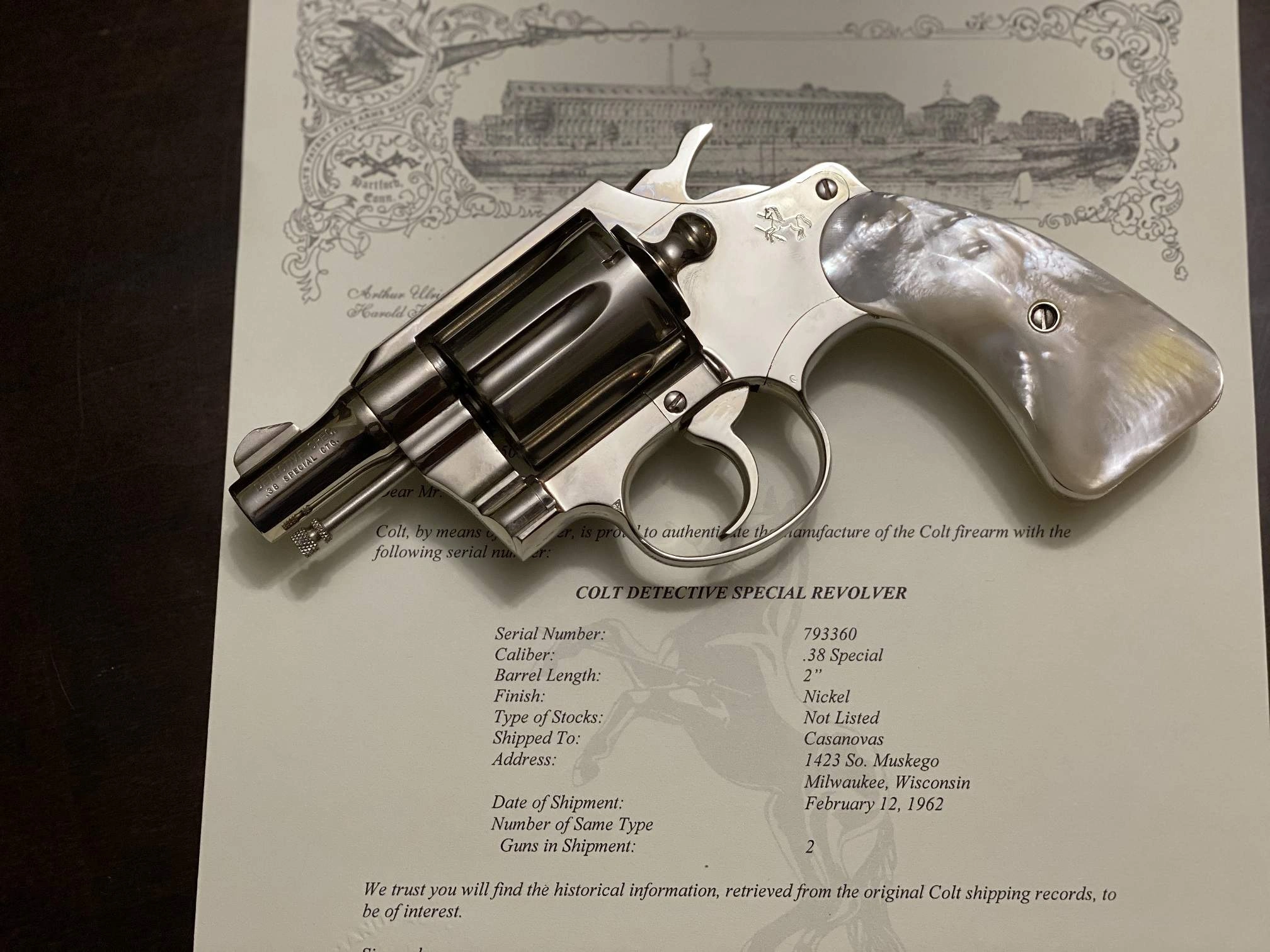
Finishes: Blue is the standard collector baseline. Nickel-finished guns, chrome-plated examples, pinto-style specials, factory engraved revolvers, and documented special-order guns can bring large premiums when originality is clear.
Grip types: Early guns may have pre-war stocks and small-frame medallion details; post-war guns moved through plastic and wood stocks; 1966 brought extended wraparound wood stocks; fourth-issue guns are commonly seen with rubber grips. Mismatched or later replacement grips are common, so the grip style should agree with the serial-number era.
Special editions, law-enforcement use, and rare configurations: The major collector standouts include early square-butt examples, documented World War II government or O.S.S.-associated guns, factory Fitz conversions, factory engraved revolvers, police department shipped examples, .32 New Police chamberings, nickel examples with original finish, and guns retaining the original box, papers, hang tags, and sales label.
Serial Number Ranges
Detective Special serial numbers must be handled carefully because Colt D-frame revolvers often shared serial-number blocks with related models such as the Police Positive Special, Cobra, Agent, and other small-frame Colts. The serial number is usually checked with the cylinder open, then cross-referenced by model markings, features, and Colt's own serial lookup or archive-letter service.
| Year / Cluster | Observed Serial Anchor | Collector Use |
|---|---|---|
| 1927 | 331000 | Start of Detective Special production within the Police Positive Special / Detective Special range. |
| 1932–1933 | 405000–412000 | Important square-butt to round-butt transition window; features should be examined closely. |
| 1946–1947 | 481000–490001 | Pre-war to post-war transition; early 1947 guns may show first-issue features. |
| 1952 | 607400 | Useful anchor for the .32 Colt New Police example featured on this page. |
| 1965–1966 | 861500–890800 / D900101 | Late second-issue range and beginning of D-prefix style references; grip style becomes especially important around 1966. |
| 1969–1973 | D995000–D998715, A100000, B/C/F prefixes | Late second-issue and early third-issue transition cluster; check for shrouded ejector rod on 1973 and later guns. |
| 1978 and later third-issue guns | S01001 and later prefixes | Later public charts become less complete; Colt lookup and Archive Letters are better verification tools. |
For a collector page, the most useful approach is to list known ranges and year clusters, then remind readers that the serial chart is only a starting point. Colt's public lookup is approximate and not comprehensive, while a Colt Archive Letter can document original specifications, shipment details, engraving, stocks, and special features when factory records exist.
See the Gun Collectors Club serial-number guide hub for related serial-number reference pages.
A Police Positive Derivative Built for Concealment
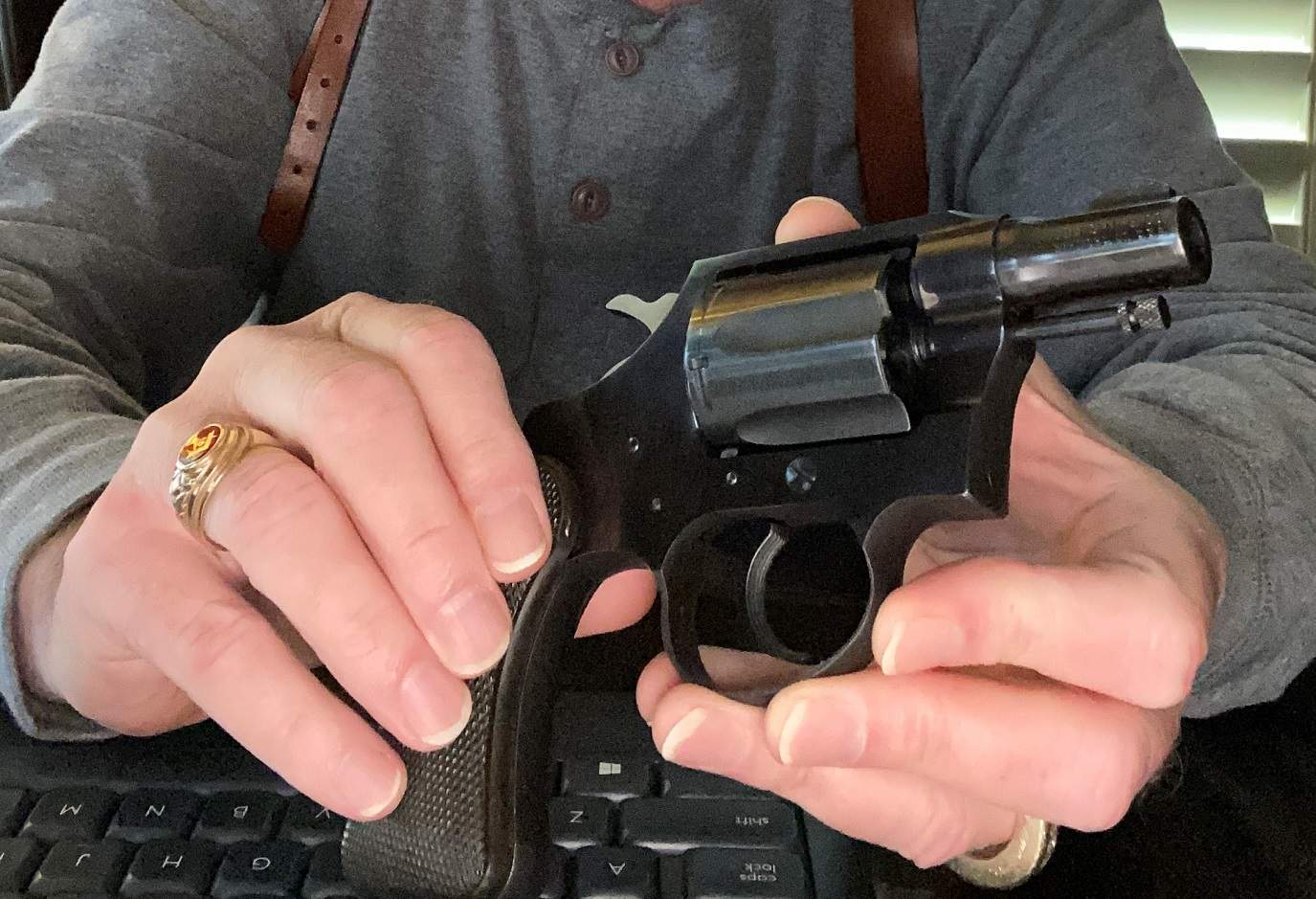
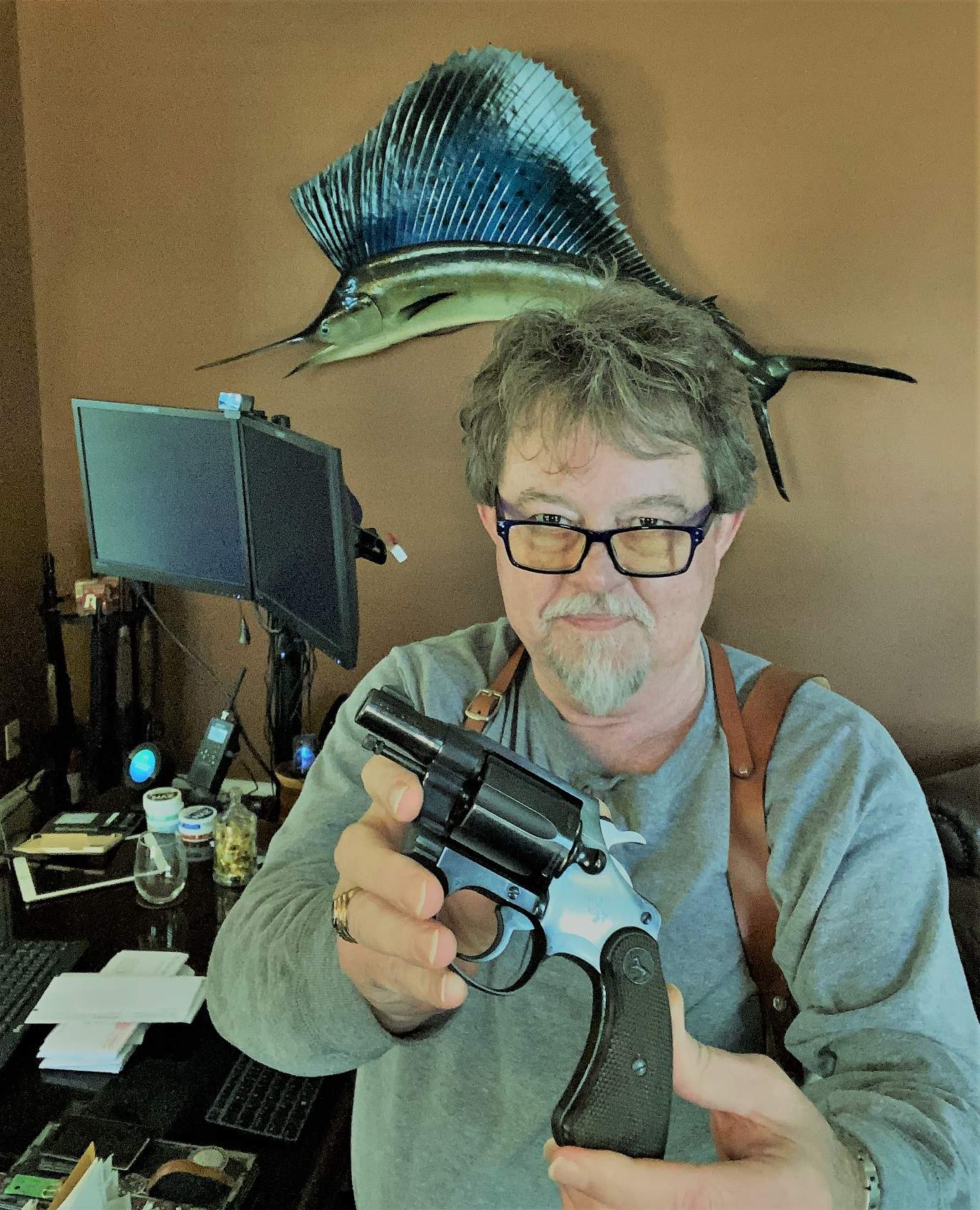
A derivative of the old Colt Police Positive, the Detective Special was produced to meet market demand for a revolver that was easier to conceal. The guns were produced in .32 and .38 caliber. My 1952 gun pictured here is a .32 Colt New Police.
Collector Notes
Condition matters more on the Detective Special than many first-time buyers expect. The model was designed to be carried, so honest examples often show holster polishing at the muzzle, thinning on cylinder edges, wear at the backstrap, and small dings around the cylinder latch. A high-condition gun with sharp markings, original grips, clean screw slots, and no obvious cylinder turn line will always stand apart.
Collectors tend to prize early square-butt first-issue guns, pre-war blue or nickel examples, .32 New Police chamberings, three-inch barrel examples, documented government or police shipments, factory engraved revolvers, factory Fitz conversions, and any gun with box, papers, hang tags, or a Colt Archive Letter. Original packaging can be especially important because the end label may confirm model, finish, barrel length, and serial number.
Accuracy and shootability are part of the Detective Special's charm. The six-shot cylinder gave it one more round than the later five-shot Smith & Wesson Chief's Special, and the D-frame grip profile gives many shooters more control than very small J-frame revolvers. Even so, collector-grade examples should be shot sparingly, and pre-war or high-condition boxed guns should be treated primarily as historical pieces.
Known Issues and Inspection Points
Timing and lockup: Colt double-action revolvers use lockwork that rewards proper inspection. Before buying, check cylinder carry-up, bolt lockup, cylinder endshake, crane alignment, single-action and double-action function, and whether the cylinder locks fully before the hammer falls. A revolver that is out of time can require a specialist familiar with older Colt actions.
Finish wear and corrosion: Look closely at the muzzle, high edges of the cylinder, backstrap, trigger guard, crane, and under the grips. Nickel guns should be inspected for flaking, pitting beneath the plating, and evidence of buffing. Sharp roll marks and crisp sideplate edges are important because aggressive refinishing can erase collector value.
Parts availability and factory service: Colt's current service guidance says legacy models older than 10 years are generally not serviced by Colt, with limited exceptions for certain other models. For a Detective Special, that makes condition, correct parts, and a competent Colt revolver gunsmith especially important.
Ammunition cautions: Colt's current FAQ says +P ammunition is not suggested for models made before 1980. Some collector references describe the third issue as the first Detective Special era commonly associated with +P use, but a conservative collector should treat early guns as standard-pressure .38 Special revolvers unless factory documentation and mechanical condition support otherwise.
Common alterations: Bobbed hammers, changed grips, replaced barrels, reblued finish, non-original nickel, polished screw heads, and mixed boxes are common. Some changes may make a good shooter, but they usually reduce collector value unless documented as factory special work.
The 1965 .38 Special Example
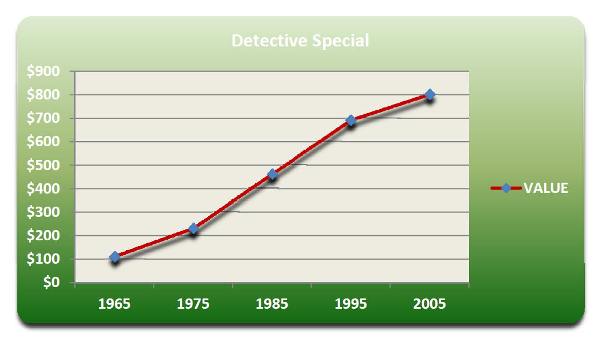
I bought this 1965 .38 gun on an online auction in 2005 for $900. Its condition is pristine: unfired, no cylinder turn mark, with original walnut grips, box, and papers.
The gun also came with an extra pair of after-market real mother-of-pearl grips, which did influence the purchase. For purposes of the historic value graph, I put the value of the gun at $800, subtracting $100 for those extra grips. Sold on their own, the grips might bring $150 to $300, but I might have paid the same price for this gun without them, so I split the difference.
Value Trends
Detective Special values remain broad because shooter-grade revolvers, pristine boxed examples, pre-war guns, and factory-documented rarities do not trade in the same lane. As of May 2026, TrueGunValue estimated an 80% condition used private-party Detective Special at about $613 and a new/new-old-stock private-party example at about $1,327. Recent sold listings showed the spread clearly: rough or altered revolvers could sell in the low hundreds, while scarce NIB, pinto, engraved, or documented examples could bring several multiples of an ordinary shooter.
For trend language, the practical collector takeaway is this: values have become more condition-sensitive. Early square-butt guns command a premium. Nickel and unusual finishes can bring more when original. Box and papers dramatically increase value on already-clean guns. Factory letters are most important for military, police-shipped, engraved, pearl-stocked, Fitz, or otherwise unusual revolvers.
The 1965 boxed example on this page illustrates the point. In 2005, $900 was a strong price for a Detective Special, but the box, papers, walnut grips, lack of a turn line, and overall preservation made it a collector purchase rather than just a shooter purchase. In today's market, that distinction matters more than ever.
Two Examples from the Collection


Collector Takeaway
Variation, Condition, and Documentation Drive Value
The Detective Special is common enough to study but varied enough to reward careful collecting. Production issue, chambering, barrel length, finish, grip style, box, papers, factory letter, and mechanical condition all shape collector interest.

About Greg Cook
Greg Cook writes about firearms collecting, personal history, and the stories behind interesting guns. His Army MOS was 76Y, Unit Armorer, and he brings that practical background to collector articles.
Research Sources Consulted
- American Rifleman: This Old Gun - Colt Detective Special - production issues, Police Positive Special roots, square-butt change, World War II / O.S.S. context, and later SF-VI / DS-II lineage.
- Rock Island Auction: What Issue is My Colt Detective Special? - collector issue identification, transition years, feature changes, and auction-market context.
- ProofHouse: Police Positive Special & Detective Special Serial Numbers - serial-number anchors and year clusters for the shared Police Positive Special / Detective Special range.
- Colt Serial Number Lookup - approximate manufacture-date lookup and warnings about shared or incomplete serial records.
- Colt Archive Services - factory-letter documentation for original specifications, shipment details, and special features.
- Colt Service - current service guidance for legacy models and replacement-parts cautions.
- TrueGunValue: Colt Detective Special Value Trends - current 2026 asking and sold-value context.
Related Revolver Reading
Holsters for Detective Specials
The original page highlighted Detective Special holsters for readers who collect, display, or accessorize classic Colt D-frame revolvers.
Detective Special HolstersAs an Amazon Associate I earn from qualifying purchases. I only link to products, books, tools, and accessories that fit the editorial purpose of Gun Collectors Club.